

Apni Chhat Apna Ghar Program 2026
Apni Chhat Apna Ghar Program 2026 In Punjab, housing has quietly become one of the biggest struggles for ordinary families. Over the years, I have personally observed people working day and night, saving money, yet still unable to build a small house for their children. Rent keeps increasing, construction materials are getting expensive, and wages remain limited. For a daily wage earner or a low-income household, owning a home now feels almost impossible.
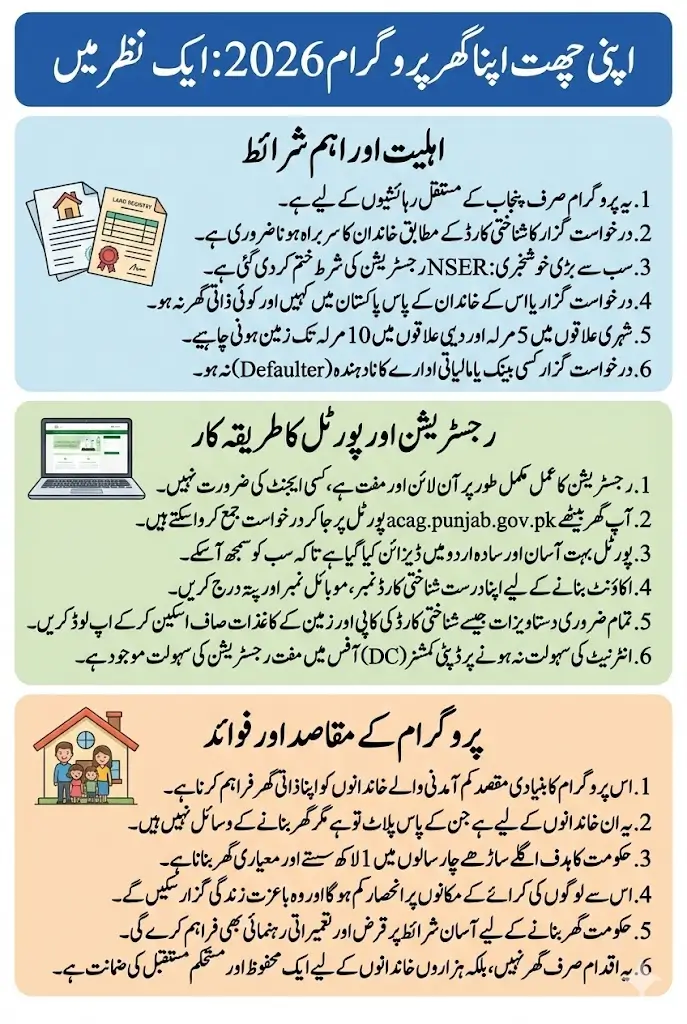
Keeping this harsh reality in mind, the Punjab government introduced the Apni Chhat Apna Ghar Program 2026 under the leadership of Chief Minister Maryam Nawaz Sharif. This initiative focuses on families who already own a small piece of land but do not have enough resources to build a house. Instead of leaving such families dependent on rent forever, the government has stepped in with a structured housing support plan.
This program is especially important in 2026, as inflation and construction costs have crossed the reach of common citizens. Through this scheme, the government aims to restore dignity, security, and stability to thousands of families across Punjab.
You Can Also Read: ACAG Scheme Loan Eligibility & Required Documents
Purpose and Long-Term Targets of the Scheme
The core purpose of the Apni Chhat Apna Ghar Program is not temporary relief, but permanent home ownership. Unlike short-term assistance programs, this scheme is designed to help families build their own houses on land they already own, allowing them to live independently without fear of eviction.
The Punjab government has set a long-term target of constructing 100,000 affordable houses over the next 4.5 years. These homes will be developed across different districts of Punjab, ensuring that both urban and rural families benefit equally.
Key objectives of the scheme include:
- Reducing long-term rental dependency
- Supporting land-owning but financially weak families
- Improving living standards for low-income households
- Providing structured loans and construction guidance
This clear planning shows that the government is thinking beyond announcements and focusing on real execution.
You Can Also Read: Apni Chhat Apna Ghar Program Update 2026
Government Departments Behind the Initiative
The implementation of this massive housing project has been entrusted to the Punjab Housing and Town Planning Agency (PHATA). PHATA has prior experience in managing housing and urban development projects, which adds credibility to the scheme. From land verification to construction oversight, PHATA plays a central role.
The program is supervised by the Development and Public Health Engineering Department, which ensures that construction standards, transparency, and fairness are maintained throughout the process. Government monitoring reduces chances of misuse, favoritism, or corruption.
Together, these departments ensure:
- Transparent application processing
- Fair selection of beneficiaries
- Proper technical and legal verification
- Responsible use of public funds
Who Can Benefit From This Housing Support Program
This scheme is clearly designed for low-income families who are struggling to build a home despite owning land. In my field experience, I have met countless families living in rented houses while their small plots remain unused simply because they cannot afford construction costs.
A major relief for many applicants is that NSER registration is no longer mandatory. This change opens doors for thousands of families who were previously excluded from government schemes despite being deserving.
The program mainly benefits:
- Families living in rented houses
- Land owners without constructed homes
- Low-income households in urban and rural Punjab
- Families excluded from NSER-based programs
Residency and Identity Conditions for Applicants
To ensure that benefits remain within Punjab, only permanent residents of Punjab are eligible to apply. This condition helps prioritize local families who have lived and worked in the province for years.
Another important requirement is that the applicant must be the head of the household according to NADRA records. This avoids duplicate applications and ensures that each family receives only one housing benefit.
Applicants must also ensure that neither they nor their family members own any other house anywhere in Pakistan. This rule keeps the scheme focused on homeless families only.
Land Ownership Limits Defined by Government
Land ownership is a compulsory condition under this scheme, but the government has clearly defined limits to prevent misuse. These limits ensure that the program benefits only small landowners, not investors or large property holders.
The allowed land limits are different for urban and rural areas, keeping regional realities in mind.
| Area Category | Maximum Land Ownership Allowed |
|---|---|
| Urban Areas | Up to 5 Marla |
| Rural Areas | Up to 10 Marla |
Applicants must provide valid land ownership documents such as registry or intiqal records during application.
Financial and Legal Screening Rules
To protect government funds, strict financial screening has been introduced. Applicants must not be defaulters of any bank, microfinance institution, or financial organization. This condition ensures that loans and assistance are provided to responsible individuals.
Legal screening is equally important. Applicants involved in criminal activities or anti-state actions are not eligible. This rule maintains the integrity of the program and ensures public trust.
Key screening requirements include:
- No unpaid bank or loan defaults
- Clean criminal record
- No involvement in illegal or anti-state activities
Digital Application System Overview
The Punjab government has introduced a user-friendly online portal at acag.punjab.gov.pk to make registration easy and transparent. This system allows citizens to apply from home without paying any agent or visiting multiple offices.
From my observation, the portal is designed in simple language, making it accessible even for users with limited digital skills. This step has significantly reduced corruption and unnecessary delays.
Major benefits of the online system include:
- Free and paperless registration
- Transparent application tracking
- Reduced travel and processing costs
- Equal access for all applicants
Account Creation Process on ACAG Portal
The first step is creating an account on the official portal. Applicants must enter basic personal information including CNIC, mobile number, and address. The system then allows them to set a secure password.
It is very important to enter correct information. Even a small spelling mistake or wrong CNIC number can delay verification or cause rejection later.
Information required for account creation includes:
- Full name (as per CNIC)
- CNIC number
- Mobile number and network
- Email address
- Complete residential address
Accessing the Housing Application Dashboard
After successful registration, applicants can log in using their CNIC and password. A self-declaration certificate appears first, requiring confirmation of eligibility conditions.
Once accepted, the application dashboard opens. This dashboard allows applicants to fill out the form, upload documents, and review their progress step by step.
Structure of the Online Application Form
The application form is divided into multiple sections to avoid confusion. Each section must be filled carefully, as incorrect or false information may lead to rejection.
Applicants are advised to take their time and ensure accuracy before moving to the next section.
Main sections of the form include:
- General personal information
- Land and property details
- Socio-economic background
Document Verification and Upload Guidelines
Document upload is one of the most sensitive steps. Clear and readable documents increase the chances of approval, while blurry or incorrect uploads may delay processing.
Applicants must upload CNIC copies, land documents, and a recent photograph within the allowed size and format limits.
Reviewing and Submitting the Application
Before final submission, applicants are shown a review page. This is the last chance to correct mistakes. I strongly recommend rechecking every detail carefully.
There is also a comments section where applicants can explain financial difficulties or special circumstances. This can positively support the application.
Application Review and Shortlisting Process
Once submitted, the application is reviewed by PHATA and relevant authorities. This includes document verification, eligibility checks, and sometimes field surveys.
Shortlisted applicants are contacted for further steps, including technical inspections and loan-related guidance. This phase determines final approval.
Facility for Applicants Without Internet Access
Understanding that many citizens lack internet access, the government has provided offline registration facilities through Deputy Commissioner offices. Staff members assist applicants free of cost.
This facility ensures that no deserving family is excluded due to lack of digital access.
Official Help Channels for Applicants
Applicants facing issues can contact official helplines, email support, or visit DC offices. Citizens are strongly advised to rely only on official sources and avoid agents.
Common Questions Applicants Usually Ask
Many applicants ask about fees, eligibility, and documentation. The government has clarified that registration is free, NSER is not required, and land ownership is compulsory.
Conclusion
The Apni Chhat Apna Ghar Program 2026 is a realistic and practical solution for thousands of families in Punjab who have land but no home. From my experience, programs like this can genuinely change lives when implemented properly.
If you meet the eligibility criteria, apply as early as possible through acag.punjab.gov.pk. Provide accurate information, prepare your documents carefully, and use official support channels if needed. This initiative is not just about houses—it is about dignity, security, and a stable future for Punjab’s families